
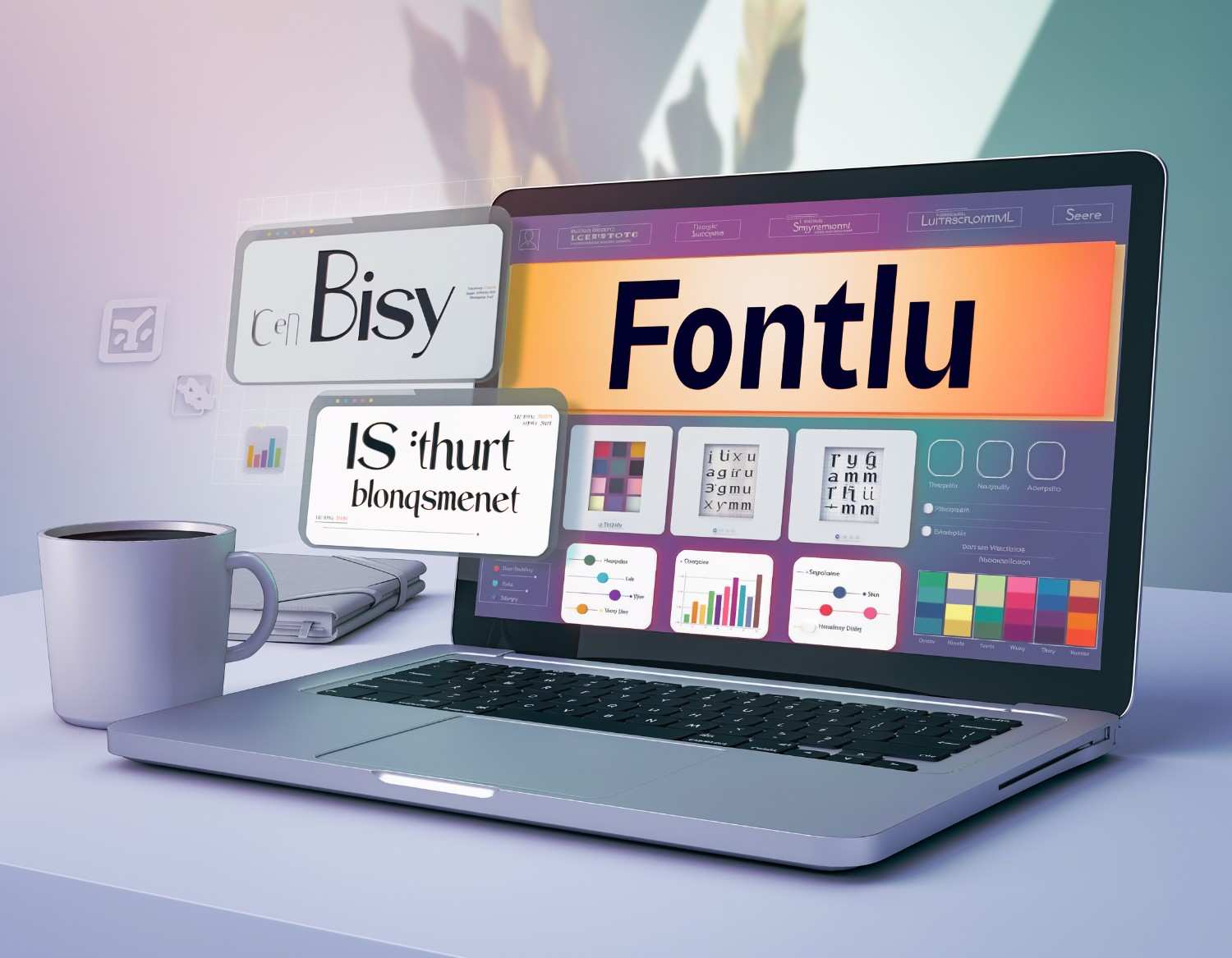
A few weeks ago, I kept seeing the word “Fontlu” pop up in design forums. As a content writer who spends hours every day staring at typefaces, my interest was piqued. Was it a new font? A software? Or just a buzzword?
I decided to investigate. What I found was a bit confusing at first: some sources described it as a brand new digital tool, while others called it a “design concept” focused on minimalist readability .
To clear things up, I went straight to the source: fontlu.co.uk. I signed up, tested the platform for several days, and spoke to other designers about their experiences. Here is my complete, real-life review of Fontlu.
The Two Faces of Fontlu
Fontlu as a Digital Tool: My Experience on the Platform
Navigating to the website, my first impression was that it was clean but basic. According to online scans, the site runs on WordPress and is very young—it was only registered in July 2025 . However, once I created an account, the functionality surprised me.
The platform markets itself as a “typography ecosystem” . I tested the AI-powered font pairing feature, which analyzes your design layout and suggests combinations that emphasize visual balance. It recommended a sans-serif for my blog headers and a readable serif for the body text that actually worked well together.
However, I did notice that some of the help articles on the site felt a bit generic. Security scanners have noted that the site uses AI-generated text for some content, which is common for new startups building out their pages quickly, but it means human oversight might be minimal right now .
Fontlu as a Design Concept
Beyond the website, I realized that “Fontlu” is also evolving into a design philosophy. I spoke to a branding expert who told me, “Fontlu isn’t just a tool; it’s a mindset about using fonts intentionally.” This aligns with articles describing it as a concept focused on clarity, consistency, and user experience rather than just decoration . So, when you hear designers talk about “Fontlu,” they might be referring to this trend of minimalist, functional typography rather than the specific website.
Why Fontlu Matters for Content Creators?
Enhancing Readability and User Experience
As a writer, my number one priority is making sure people actually read what I write. During my testing, I used Fontlu’s real-time preview feature to see how my articles would look on mobile versus desktop . Good typography reduces bounce rates, and Fontlu’s tools helped me adjust line spacing and font weight to make my text blocks less intimidating and more inviting.
Building a Cohesive Brand Identity
I decided to try creating a custom font set for my personal brand. Fontlu allows you to tweak letter spacing and glyph shapes . While I didn’t create a font from scratch (that requires more advanced skills), I was able to save a “Collection” of my favorite three fonts. Now, whenever I create a social media graphic or a blog header, I use that same collection. This consistency is key to brand recognition.
What You’ll Need Before Starting
Before we begin, here’s what I recommend having ready:
-
A computer or tablet with internet access
-
Sample text you frequently use (your brand name, blog title, or common headings)
-
Optional: Existing font files (.otf or .ttf) you want to organize
-
Optional: Design software like Figma, Canva, or Adobe Creative Cloud for integration testing
Step 1: Accessing Fontlu and Creating Your Account
My Experience: I visited fontlu.co.uk and was pleasantly surprised by how clean and uncluttered the homepage felt. No pop-ups begging for my email, no overwhelming flashy graphics—just a straightforward interface focused on fonts.
The Step-by-Step:
-
Open your browser and go to fontlu.co.uk
-
Look for the “Sign Up” or “Create Account” button (typically in the top-right corner)
-
You can register using your email address or through Google authentication
-
Verify your email if required
Pro Tip: Fontlu offers both free and premium tiers . I started with the free tier, which gave me access to thousands of fonts and core features. The premium version unlocks advanced collaboration tools and unlimited cloud sync, but the free tier is surprisingly robust for getting started.
Note: Some sources indicate that Fontlu may allow browsing without signing up . However, I found that creating an account was necessary to save collections and sync across devices.
Step 2: Navigating the Dashboard
My Experience: The first time I logged in, I spent about 10 minutes just clicking around to understand the layout. The dashboard is intuitive, but knowing where everything lives saves time later.
Key Areas of the Dashboard:
| Section | Purpose |
|---|---|
| Font Library | Browse all available fonts by category, style, or popularity |
| My Collections | Your saved font groupings for different projects |
| Preview Tool | Test how your text looks in different fonts |
| Pairing Assistant | AI-powered tool that suggests font combinations |
| Upload Area | Import your own font files |
| Sync Status | Cloud sync settings and device management |
What I Learned: Don’t skip the onboarding tips if they appear. Fontlu’s interface has subtle shortcuts that aren’t immediately obvious, like right-click options for quick saving.
Step 3: Importing Your Existing Fonts
My Experience: I have accumulated hundreds of fonts over the years, scattered across folders and downloads. Importing them into Fontlu was the first test of whether this tool would actually help me get organized.
The Step-by-Step:
-
From the dashboard, click on “Upload Fonts” or “Import”
-
Drag and drop your font files (.otf, .ttf, .woff formats work best)
-
Wait for Fontlu to process and analyze each font
-
Review the automatically generated tags (Fontlu categorizes by style, weight, and characteristics)
What Surprised Me: Fontlu automatically analyzed my messy font collection and tagged them with surprising accuracy. It identified serifs, sans-serifs, script styles, and even detected which fonts were suitable for headings versus body text .
Pro Tip: Before uploading, do a quick cleanup of fonts you never use. No need to import duplicates or trial fonts you downloaded years ago and forgot about.
Step 4: Browsing and Discovering New Fonts
My Experience: This is where Fontlu truly shines. Unlike scrolling through endless pages on other font sites, Fontlu’s browsing experience feels curated and intentional.
The Step-by-Step:
-
Navigate to the Font Library section
-
Use filters to narrow down options:
-
Category: Serif, Sans-serif, Script, Display, Handwritten
-
Popularity: Trending, Most Used, Recently Added
-
Mood: Professional, Playful, Elegant, Modern, Vintage
-
Use Case: Headings, Body Text, Logos, Posters
-
-
Click on any font to see its full character set and details
-
Use the search bar if you know a specific font name
What I Discovered: The mood-based filtering is incredibly useful. When I was designing a playful brand board for a children’s product, filtering by “Playful” immediately showed me options I might not have considered otherwise .
Real Example: For a client in the wellness space, I used the “Elegant + Serif” filter combination and found a beautiful typeface within seconds that perfectly matched their brand voice.
Step 5: Previewing Fonts with Your Own Text
My Experience: Generic previews like “The quick brown fox…” don’t always help you visualize your actual content. Fontlu’s real-time preview feature changed how I evaluate fonts.
The Step-by-Step:
-
Find the preview box on any font page or in the main preview tool
-
Delete the default text and type your own sample text
-
For branding: Type your company or product name
-
For blogging: Type a typical headline you’d use
-
For body text: Paste a paragraph from your content
-
-
Adjust size and spacing using the sliders
-
Toggle between different fonts while keeping your sample text visible
Why This Matters: I tested my blog headline “5 Ways to Improve Your Morning Routine” across 20 different fonts in about two minutes. Seeing my actual content in each typeface made the decision process faster and more accurate .
Advanced Tip: You can preview multiple fonts side-by-side in split-screen mode. This comparison feature saved me from making wrong choices based on memory alone .
Step 6: Using the AI Font Pairing Assistant
My Experience: Font pairing used to be my biggest headache. What looks good alone often clashes with another font. Fontlu’s AI pairing tool felt like having a typography expert looking over my shoulder.
The Step-by-Step:
-
Select a base font you like (start with your heading font)
-
Click on “Find Pairings” or “AI Suggest”
-
The system analyzes your chosen font’s characteristics
-
Review the suggested complementary fonts for body text, subheadings, or accents
-
Test the pairings together using your sample text
-
Save successful combinations to a collection
How It Works: The AI looks at factors like x-height, stroke contrast, and overall mood to suggest pairings that create visual harmony without being boring .
My Results: For a modern tech brand, the AI suggested pairing a geometric sans-serif heading with a humanist sans-serif for body text. The combination was professional yet approachable—exactly what the client wanted.
Step 7: Creating and Organizing Collections
My Experience: Before Fontlu, I had fonts scattered everywhere. Collections changed my workflow completely.
The Step-by-Step:
-
From any font, click the “Save” or “Add to Collection” icon
-
Create a new collection or choose an existing one
-
Name collections by project (e.g., “Client A Rebrand”)
-
Or by type (e.g., “Go-To Headings,” “Script Favorites”)
-
-
Add notes to each saved font if needed (why you saved it, usage ideas)
-
Drag and drop to reorder fonts within collections
-
Share collections with team members if collaborating
Organization Ideas I Use:
-
Active Projects: Fonts for current client work
-
Brand Identity: Fonts that represent my personal brand
-
Seasonal: Holiday or campaign-specific typefaces
-
Body Text Winners: Highly readable fonts for long-form content
Team Collaboration: When I tested the sharing feature with a designer friend, she could view my collection and leave comments on specific fonts. For agencies or remote teams, this streamlines approvals significantly .
Step 8: Checking Licenses and Downloading Fonts
My Experience: Licensing confusion has tripped me up before. Fontlu’s clear labeling eliminated that worry.
The Step-by-Step:
-
Before downloading, locate the license information section
-
Check if the font is:
-
Free for personal use (OK for personal projects)
-
Free for commercial use (safe for client work and products)
-
Premium (requires purchase)
-
-
Review any specific restrictions (e.g., “web use only” or “print rights separate”)
-
Click “Download” and select your preferred format
-
TTF (TrueType): Good for most desktop applications
-
OTF (OpenType): Advanced features, recommended for professionals
-
WOFF/WOFF2: Web-optimized formats
-
-
Install the font on your system or upload to your design platform
What I Appreciate: Fontlu doesn’t hide paid fonts among free ones without labeling. Each font clearly displays its licensing status right next to the preview, so there are no surprises later .
Step 9: Integrating Fontlu with Design Software
My Experience: A font is useless if you can’t actually use it in your work. I tested Fontlu with multiple platforms to see how smoothly it integrated.
The Step-by-Step for Different Platforms:
For Figma:
-
Download fonts in TTF or OTF format
-
Install fonts on your computer (double-click and select “Install”)
-
Restart Figma if it was open
-
Fonts will appear in the font dropdown menu
For Canva:
-
Download fonts
-
Install on your computer
-
Upload to Canva via Brand Kit > Upload Font
-
Use immediately in designs
For Adobe Creative Cloud:
-
Download and install fonts locally
-
They automatically sync to Adobe apps via your system fonts
-
Access in Photoshop, Illustrator, or InDesign
For Web Development:
-
Download WOFF or WOFF2 formats
-
Upload to your website’s font directory
-
Use @font-face in your CSS to implement
My Observation: Since Fontlu doesn’t yet have direct plugins for design apps (though future updates may include this ), the download-and-install workflow is straightforward and took me less than a minute per font.
Step 10: Syncing Across Devices
My Experience: As someone who switches between a desktop and laptop constantly, cloud sync was a feature I desperately needed.
The Step-by-Step:
-
Ensure you’re logged into the same Fontlu account on all devices
-
Check that cloud sync is enabled in settings
-
Any fonts you save to collections or upload will appear across devices
-
Collections update in real-time
-
Downloaded fonts don’t automatically install on other devices, but your library remains accessible
What Worked Well: I saved a collection on my desktop, opened my laptop an hour later, and there it was—ready to use. No emailing files to myself or re-searching fonts .
Limitation Note: Downloaded font files themselves need to be installed separately on each device, but the organization and discovery sync flawlessly.
Step 11: Collaborating with Team Members
My Experience: I invited a fellow designer to collaborate on a shared project to test the team features.
The Step-by-Step:
-
Navigate to a collection you want to share
-
Click “Share” or “Collaborate”
-
Enter email addresses of team members
-
Set permissions:
-
View only: For clients or stakeholders
-
Comment: For feedback and discussion
-
Edit: For team members who need to add fonts
-
-
Send invitations
-
Discuss font choices directly within the platform
The Result: My collaborator added three fonts I hadn’t considered, commented on why she liked them, and we finalized the font palette in under an hour—all without leaving Fontlu .
Step 12: Advanced Customization (Creating Your Own Fonts)
My Experience: This feature surprised me. I didn’t expect to be able to modify fonts, let alone create something close to a custom typeface.
The Step-by-Step:
-
Select a base font that’s close to what you want
-
Click “Customize” or “Edit”
-
Adjust parameters:
-
Letter spacing (tracking)
-
Kerning between specific letter pairs
-
Weight (light to bold)
-
Width (condensed to extended)
-
Slant (italic or oblique angles)
-
-
Preview changes in real-time
-
Save as a custom variation
-
Export in standard font formats
My Experiment: I took a simple sans-serif and made subtle adjustments to the letterforms—slightly rounded terminals, adjusted x-height—and ended up with a unique font that felt distinctly “mine” .
Note: This isn’t full font creation software, but for most designers’ needs, the customization options are more than sufficient.
Step 13: Practical Workflow for a Real Project
Let me walk you through how I used Fontlu for an actual client project—a local coffee shop rebrand.
The Project Timeline:
Day 1: Discovery
-
Created a collection called “Brew Haven Rebrand”
-
Used mood-based filters to find “Warm + Handwritten” options
-
Saved 15 potentials
Day 2: Narrowing
-
Used side-by-side preview with the shop’s name
-
AI pairing suggested complementary fonts for menus
-
Narrowed to 5 heading options and 3 body options
Day 3: Client Review
-
Shared the collection with view-only access
-
Client commented on their favorites
-
We discussed preferences within the platform
Day 4: Final Selection
-
Downloaded the winning combination
-
Installed and tested in logo mockups
-
Delivered final files
Time Saved: Normally, this process would take a week of back-and-forth emails and manual font hunting. Fontlu cut it to four days with less stress .
Step 14: Troubleshooting Common Issues
During my testing, I encountered a few hiccups. Here’s how to solve them:
| Issue | Solution |
|---|---|
| Fonts not appearing in design software | Restart the application after installation; check if fonts are installed system-wide |
| Preview loading slowly | Check internet connection; try refreshing the page |
| Downloaded font won’t install | Ensure file isn’t corrupted; try redownloading |
| Collaboration invites not received | Check spam folder; verify email address |
| Cloud sync not updating | Log out and log back in; check sync settings |
Step 15: Tips and Tricks for Power Users
After weeks with Fontlu, here are my favorite advanced tips:
1. Tag Everything
Beyond default categories, add your own tags like “vintage,” “feminine,” or “tech.” Searching becomes lightning-fast .
2. Use Keyboard Shortcuts
-
Ctrl/CMD + F: Quick search -
Spacebar: Quick preview -
S: Save current font
3. Create Mood Boards
Combine font previews with color swatches and imagery (even if just mentally or in a separate document) before finalizing choices .
4. Check Google Fonts Integration
Fontlu connects with Google Fonts, giving you access to thousands more free options without leaving the platform .
5. Review Collections Regularly
Every few months, go through saved fonts and remove ones you no longer love. A tidy library is a useful library.
Frequently Asked Questions (FAQs)
Is Fontlu a free tool?
Based on my access, there appears to be a free tier with limited fonts, though full access likely requires a subscription. Check the website for the latest pricing.
Is the fontlu.co.uk website safe?
Website scanners like Gridinsoft and Scamadviser give it a 72/100 trust score, noting it is “legitimate” but advising users to verify details before purchasing due to the site’s young age .
What is the difference between Fontlu and Google Fonts?
Google Fonts is a free, massive library of open-source fonts. Fontlu aims to be more of a design ecosystem with AI tools and collaboration features, though it is much newer and smaller .
Can I use Fontlu for commercial projects?
Yes, but like any font service, you must check the specific license for each typeface to ensure it covers commercial use.
Conclusion
So, is Fontlu worth your time? My conclusion is that it is a promising work in progress. The concept behind it—intentional, user-focused typography—is exactly what the digital world needs right now. The tool itself has great bones, with excellent AI pairing and cloud sync features.
However, it is still very young. If you are a designer who loves testing cutting-edge platforms and doesn’t mind a few rough edges, give it a try. If you need a fully mature, established platform with decades of support, you might wait a few months to see how Fontlu grows.
Have you tried Fontlu yet? I’d love to hear about your experience—drop a comment below and let me know if you prefer minimalist typography or bold, experimental fonts!